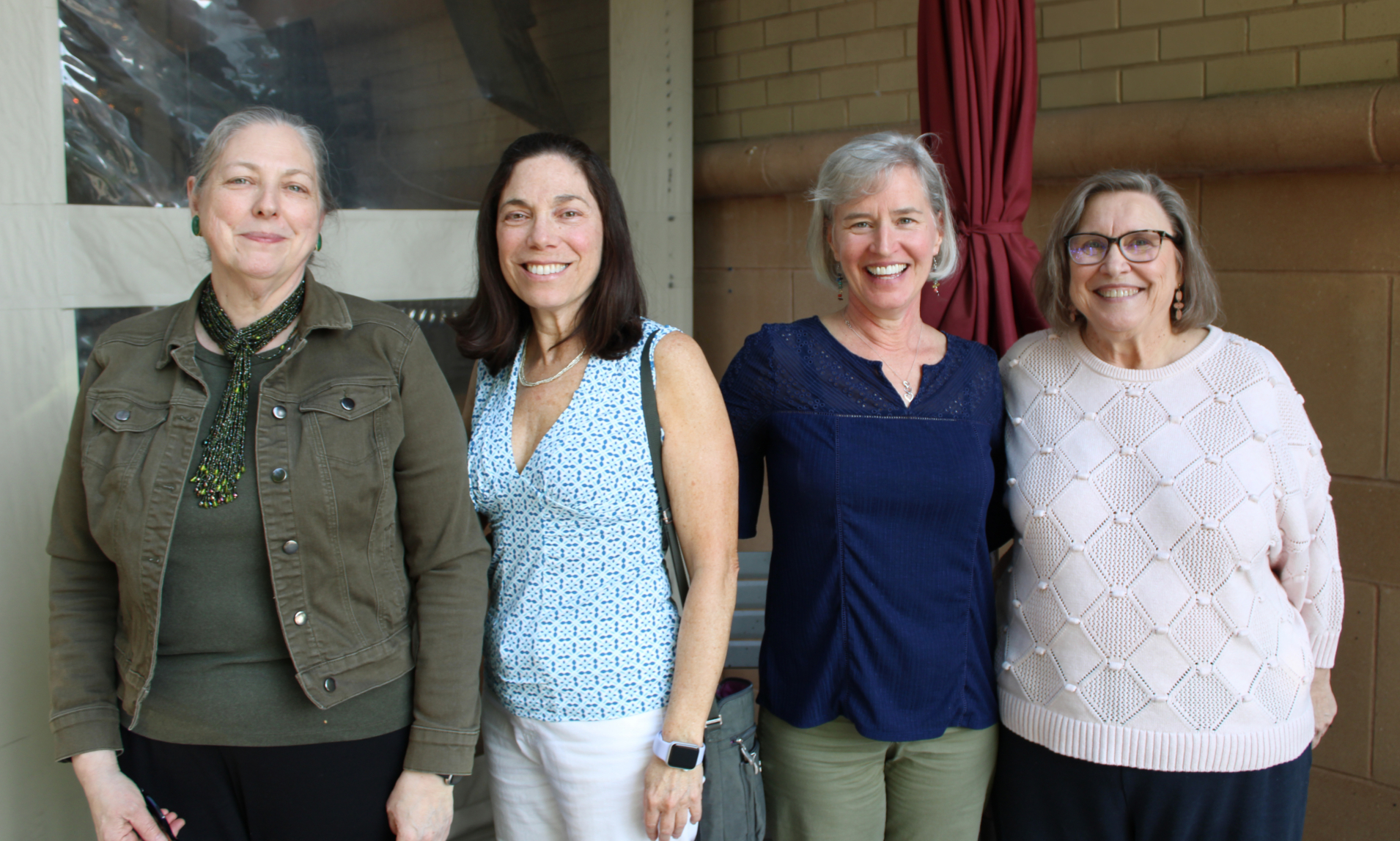
Photo above: AHC’s Resident Services leaders from 1993 to present (left to right): Amy Fuller, Marjorie Burdetsky, Jennifer Endo, and Susan Davidson.
Part of a story series about AHC’s 50-Year History
More than 30 years ago, the Resident Services team at Affordable Homes & Communities (AHC) — then Arlington Housing Corporation — consisted of a single staff member working to establish community services across AHC’s Arlington properties. Today, the team includes more than 50 staff members serving thousands of residents across 56 communities in the mid-Atlantic region.
In 1993, AHC leaders took a chance, creating a six-month, grant-funded, part-time role: Resident Services and Volunteer Coordinator. The goal was simple but ambitious — begin building services at every property, largely with the help of volunteers.
Amy Fuller stepped into that initial role. With about 10 properties and limited resources, the work was experimental and fast-moving.
“I was there throwing stuff into the wind and seeing whatever would take root,” Amy said. “I wasn’t there long enough to make it consistent. It was a little glimpse into what it could be.”
Building a Foundation: Relationships and Early Programs
After the initial trial, AHC hired Marjorie Burdetsky full-time in 1994. Over the next four years, she laid critical groundwork: launching a resident newsletter, organizing community events, and helping establish AHC’s tutoring programs.
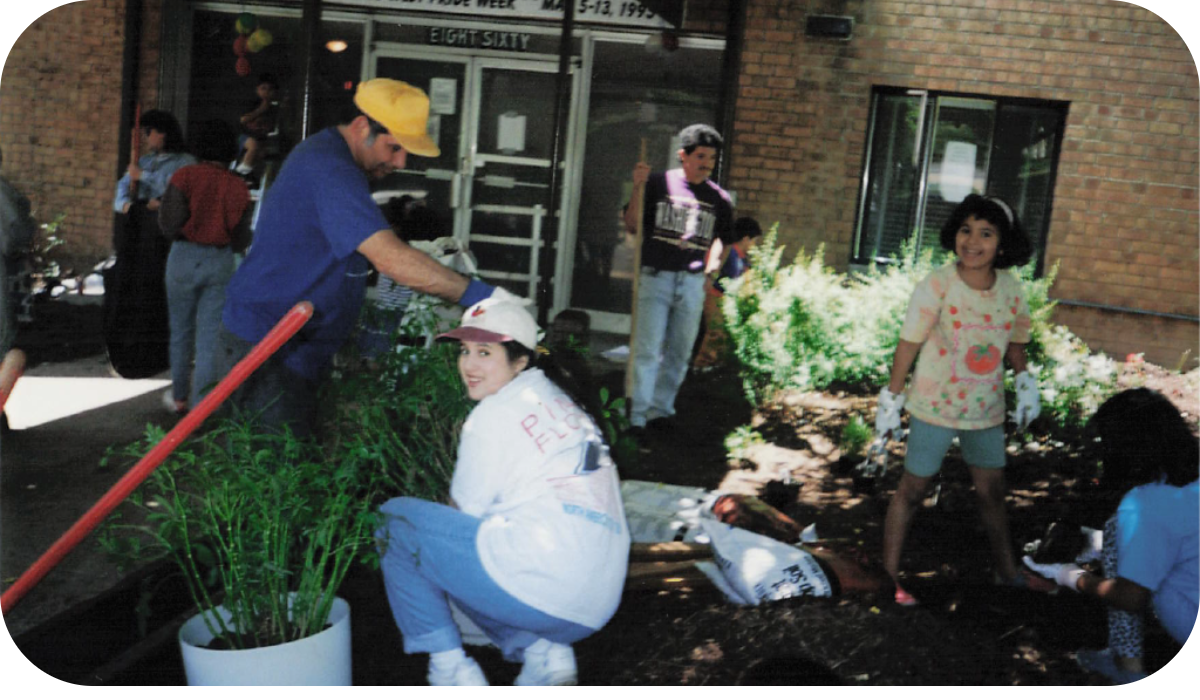
“It reinforces that if everybody helps a little bit, it can make a huge impact. I remember one of our kids got to go to the 4-H camp, and I saw them maybe 10, 15 years later and they said that camp changed my life, that one experience.”
– Marjorie Burdetsky, first full-time Resident Services staff member
Central to her work was building trust with residents.
“My theme at that time was building relationships, just trying to get people to believe that this is something they can count on and that they can go to for help and trust,” Marjorie said.
She also recognized the importance of partnerships, working with Arlington County and a wide variety of partnerships to bring additional resources into AHC communities.

“It’s always good to have people who know how to organize things, who work hard, who have time and have money and care about the people,” Marjorie said. “We had a lot of nice groups come through like that …. It takes a village.”
Looking back, Marjorie sees one decision as especially impactful.
“The best thing I ever did, and I did a lot of great things, but was to recruit Jen,” Marjorie said. “I knew that she would build something amazing.”
Scaling Impact: A Staff Member in Every Community
Jennifer Endo joined AHC in 1998 as Resident Services Manager and quickly helped move the program into its next phase. Early on, AHC expanded its focus to include both education and health programming.
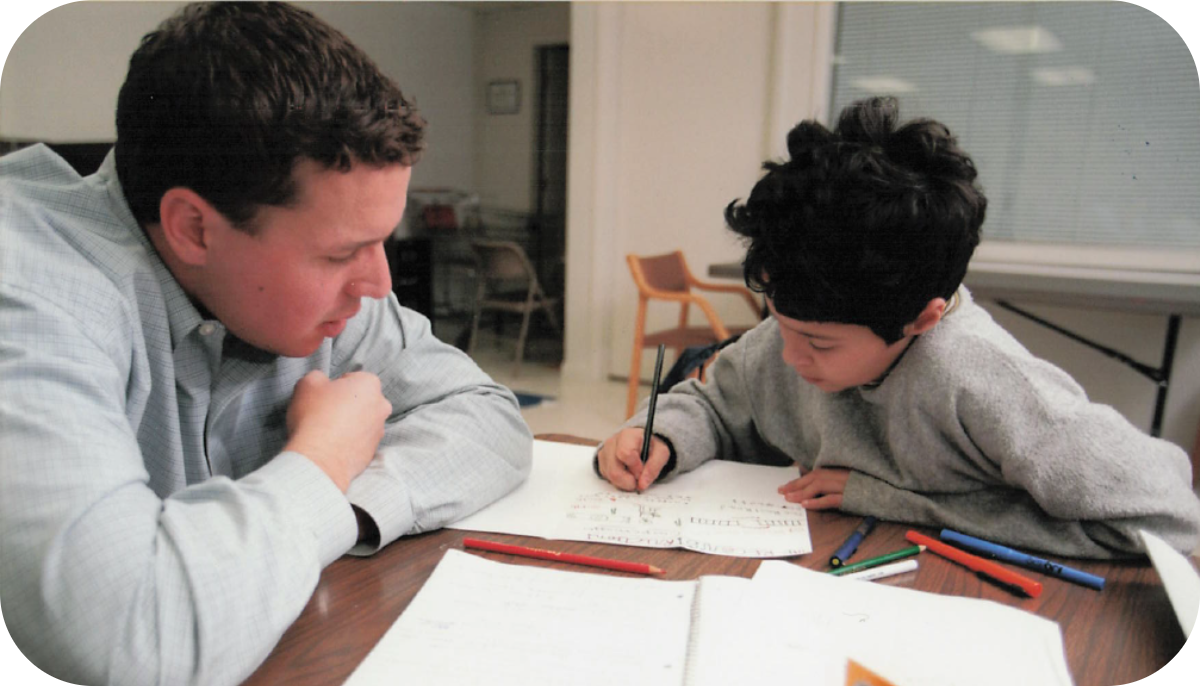
A pivotal shift came with grant funding that allowed AHC to place a dedicated full-time staff member in each community — deepening relationships and significantly increasing impact.
“We were in our cars all the time running around, and I used to be like, ‘Oh, I love the families at Virginia Gardens. I wish I could just work at Virginia Gardens. I’d have so many relationships that I could do so much more,’” Jennifer said. “So, then we got a grant, and we were able to hire one person per community. That’s when we really saw the growth.”
As Jennifer rose to Director of Resident Services, the program expanded its reach — both geographically into Maryland and Washington, D.C., and programmatically into education, health, food access, and community-building.
Her connection with residents remained at the heart of the work.
“I do remember in the early days I used to show up at Fort Henry, and the kids knew my car,” Jennifer said. “They’d see my car and then they’d find me whether I was delivering flyers or in the community center. They were like, ‘Hey, what are we going to do today?’ It was sweet.”

By the time Jennifer transitioned to Vice President of Community Relations in 2016, the team had grown to more than 25 staff members.
“It made a huge difference having staff on the ground in AHC’s communities. When the organization saw the impact, leadership began to invest more in Resident Services and growing the team.”
– Jennifer Endo, former Director of Resident Services and current Vice President of Community Relations
Expanding Services and Meeting New Challenges
In 2017, Susan Davidson joined AHC as Vice President of Resident Services, with a vision to strengthen onsite services as a foundation for housing stability, community well-being, and long-term opportunity.
“Housing stability became a much bigger part of our work because stable housing is the foundation upon which residents can build the lives they want for themselves and their families,” Susan said. “We developed structured eviction prevention protocols, strengthened coordination with asset management and property management partners, and built systems that allow us to respond proactively rather than reactively.”
That infrastructure became essential during the COVID-19 pandemic, when Resident Services rapidly shifted operations to crisis response, resource coordination, and eviction prevention across all AHC communities.
“We essentially turned the entire team into social service providers. It was a tremendous pivot,” Susan said. “For the first time in my career, leadership asked, ‘Do you need more people?’ Every time they asked, I said yes — because the need was enormous. We helped bring more than $15 million in federal relief and emergency assistance to residents, helping families remain housed and connected to critical resources.”
Today, AHC’s Resident Services programs serve thousands of residents through four cornerstones: Education & Youth Development, Health & Wellness, Economic Mobility & Housing Stability, and Community Building & Engagement. The team includes 50 full-time and 10 part-time staff, including educators, social workers, and public health professionals.
“The people leading this work are deeply committed to residents. We’ve intentionally built interdisciplinary teams because creating real opportunity for residents requires both strong relationships and strong systems.”
– Susan Davidson, Vice President of Resident Services
A Lasting Impact
For those who were there at the beginning, the program’s growth is striking.
“Certainly, it’s more than just a place to live,” Amy said. “You’re really looking at creating a community and impacting the lives of the people that live there, not just providing shelter, which I think obviously whoever decided to create the position that I was fortunate enough to be in had a vision of that as an eventual goal, which took some forethought and leap of faith.”
Marjorie reflected on a core value that has remained constant throughout AHC’s evolution.
“Everyone was welcome and supported and cared about,” Marjorie said.
As AHC celebrates its 50th anniversary, Jennifer is proud of the ways AHC has stepped up to support residents.
“Over the years, what hasn’t changed is our belief that housing is just the starting point,” Jennifer said. “When we invest in people and build relationships with them where they live, that’s when we see real, lasting impact.”
Learn more about AHC’s five decades of impact and buy your ticket for our 50th anniversary event: ahcommunities.org/50years.


2230 North Fairfax Drive
Suite 100
Arlington, VA 22201
703-486-0626
1501 Saint Paul Street
Suite 130
Baltimore, MD 21202
410-685-0366